Formalwear & suits
Evening dresses, school formals, suits and jackets — including shoulder work most shops decline.
Formalwear & suitsSonia Fashion · Brisbane City
Almost no gown fits straight off the rack. Bridal alteration is patient, precise work — and it is the difference between a dress that looks expensive and one that looks like it was made for you.
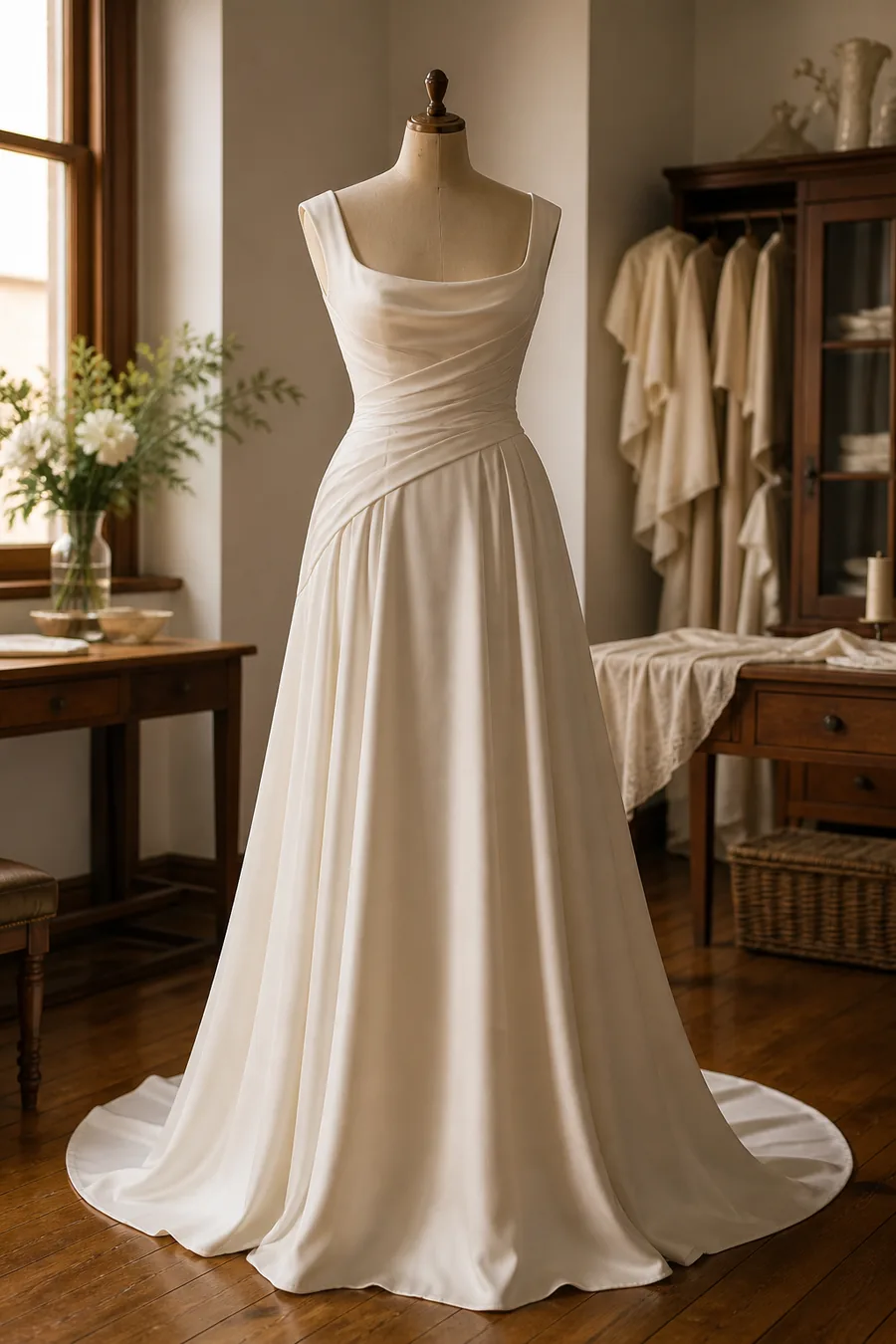 Bridal · Drape & detail
A wedding gown is rarely one alteration. It is a sequence of decisions — where the bodice should sit, how much to take from each seam so the beading still reads correctly, how long the hem needs to be in your shoes, how the bustle should fold so it survives the reception.
Sonia has spent forty years doing exactly this kind of work, on silk, lace, tulle, crepe and heavily embellished gowns. Every bride is fitted in person, on a stand and on the body, and nothing is cut until the shape is right.
Bring your gown in early. Six to eight weeks before the wedding is comfortable; earlier is better if the dress needs restructuring or you expect your measurements to change.
Timing
If the gown was ordered online or from overseas, bring it in straight away rather than waiting. Imported dresses are cut to a size chart, and how much work they need is rarely obvious from trying one on.
First fitting. Bring your shoes and undergarments. Sonia pins the gown, assesses the fabric and gives you a firm quote and schedule.
Second fitting. The main work is in; this is where the fine adjustments and the bustle are set.
Final fitting and collection, with a bustle demonstration for whoever is helping you on the day.
Shorter timeframes can often be accommodated — call the workroom and ask.
Before the first fitting
The three things brides ask before booking, answered plainly.
A gown is rarely one alteration, so it is rarely one price. A hem and a take-in is straightforward work. A beaded bodice where every seam moved has to have its beading lifted and reset by hand, which is a different job entirely. Sonia quotes at the first fitting, once she has seen the construction, and before anything is cut — so you know the number while you still have every option.
These are some of the most common gowns in the workroom. An imported dress is made to a size chart, not to a person, and often arrives needing work through the bodice, the straps and the length all at once. That is normal and usually fixable — but bring it in as soon as it lands rather than waiting, because the amount of work is not always obvious from trying it on.
Most gowns need two to three. Heavily beaded or restructured dresses can need more. You will be told which at the first fitting rather than discovering it later.
A gown with a train needs one, and which style — French, American, ballroom or over-bustle — depends on the dress rather than on preference. At the final fitting Sonia will show whoever is helping you on the day how to do it up, because the person who needs to know is not usually the bride.
Bring both to every fitting, the actual ones. A hem set to the wrong heel height is the single most common avoidable problem in bridal alteration, and it is only discovered on the morning.
Bridesmaids, flower girls and mother-of-the-bride outfits are all altered here too, and it is worth booking the party together so the group reads consistently in photographs.
If you are between dress sizes or expect your measurements to change before the day, say so at the first fitting. It changes when the work should be scheduled.
Visit the workroom
Walk-ins are welcome for simple work. For bridal or involved alterations, call ahead so Sonia can set aside proper fitting time.
Common questions
It depends entirely on the gown. A simple hem and take-in is very different work to a beaded bodice that must be reset. Sonia quotes in person at your first fitting, before any work begins, so there are no surprises.
Six to eight weeks before the wedding is comfortable for most gowns. If the dress needs significant restructuring, or you're ordering from overseas, come in as soon as you have the dress.
Most gowns need two to three fittings. Heavily beaded or restructured dresses can need more. Sonia will tell you at the first fitting.
Yes. Online and imported gowns are some of the most common work in the workroom — they are almost never cut to an individual body. Bring it in and Sonia will tell you honestly what can and can't be done with it.
Yes, and it's worth booking the whole bridal party together so the group reads consistently in photographs.
At the second fitting. Which style suits — French, American, ballroom or over-bustle — depends on the dress rather than on preference, and at the final fitting Sonia shows whoever is helping you on the day how to do it up.
Tell Sonia at the first fitting. If you expect your measurements to change, the main work is scheduled later and the final fitting moved closer to the date.
More from the workroom
Evening dresses, school formals, suits and jackets — including shoulder work most shops decline.
Formalwear & suitsMade-to-measure pieces cut and fitted to you rather than to an average.
DressmakingZips, seams, moth holes, and reworking older or inherited pieces into something wearable.
Repairs & remodellingA short fitting tells Sonia more than any photograph. Call the workroom or send a few details and she’ll talk you through the work, the fit and the timing.